

If you're searching for how much a kitchen remodel costs in Austin, you'll find plenty of guides built around $25,000 refreshes. This isn't one of them. This guide is for homeowners planning a kitchen that's designed around how they actually live: custom cabinetry built for the space, reworked layouts, statement stone, and professional-grade appliances. In Austin, those projects typically start around $100,000 and can go well beyond.
Below, we'll break down realistic 2026 ranges for custom and large-scale kitchen remodels, where the budget goes, and what separates a kitchen that's simply expensive from one that's worth the investment.
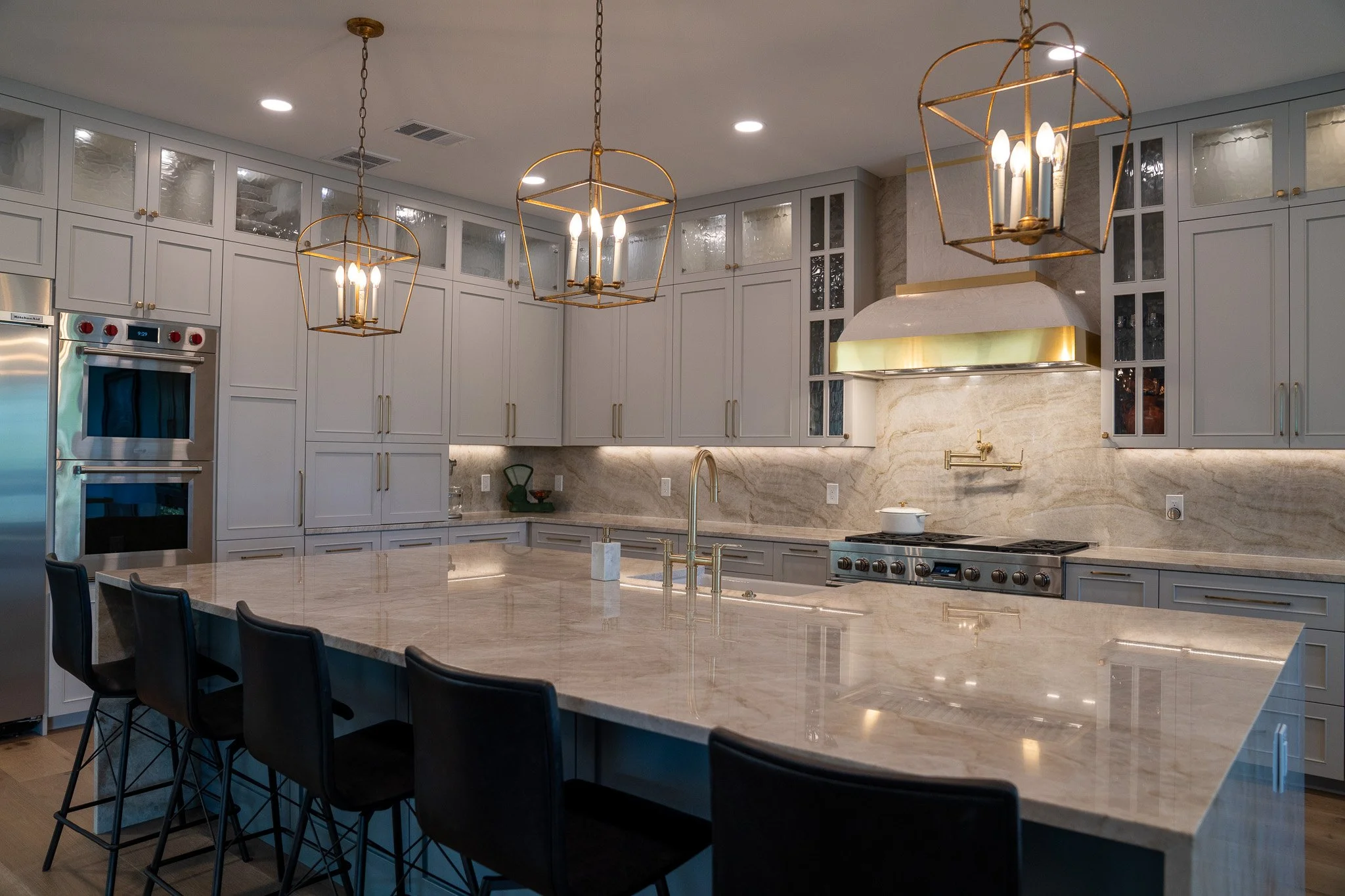
How much does a custom kitchen remodel cost in Austin?
In 2026, most custom kitchen remodels in Austin range from $100,000 to $250,000. Whole-space transformations that connect the kitchen to surrounding living areas often run $250,000 or more. Where your project lands depends on the scope.
Custom kitchen remodel: $100,000 – $150,000
Usually includes:
Full custom cabinetry
Natural stone or premium quartz countertops
Integrated or professional-grade appliances
A new lighting plan
New flooring
Updated electrical and plumbing
Large-scale custom remodel: $150,000 – $250,000
Everything above, plus:
Layout changes
Wall removal or structural beams
Island and appliance relocation
A butler’s pantry or scullery
Upgraded ventilation
Whole-space transformation: $250,000+
Usually includes:
The kitchen plus connected living and dining areas
Additions or expanded footprints
Specialty millwork throughout
Outdoor kitchen tie-ins
Smart-home integration
For context, national data from the Remodeling Cost vs. Value report has put the average upscale major kitchen remodel at around $158,500. National lifestyle and financing guides commonly cite $100,000 to $250,000+ for a top-tier kitchen. Austin projects land squarely in that range, with the final number driven more by scope and finish level than by location.
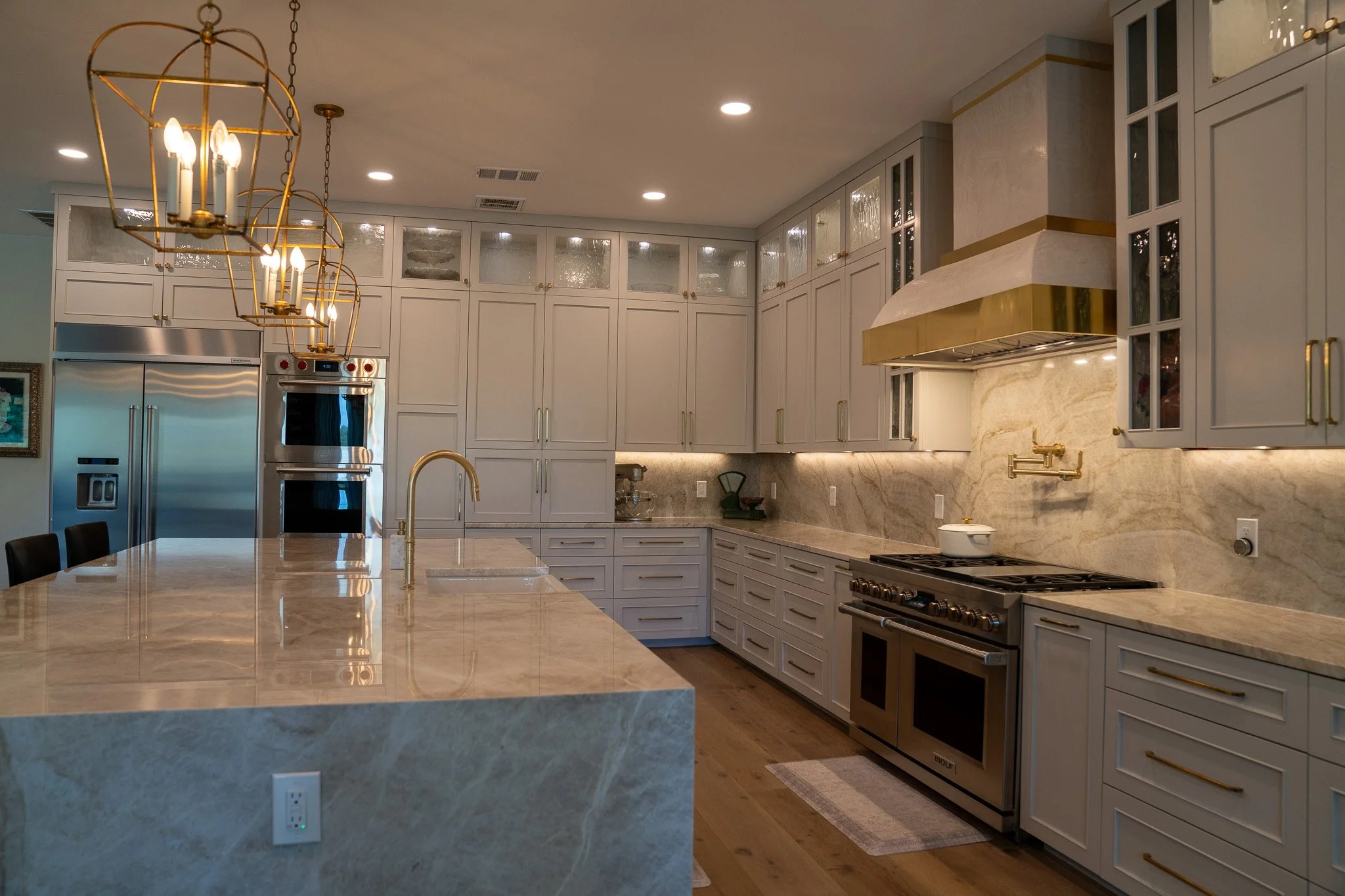
Where the budget goes in a $100K+ kitchen
In a custom kitchen, the budget shifts. Cabinetry and craftsmanship take a larger share, and structural and mechanical work become a real line item rather than an afterthought. A typical large-scale Austin kitchen breaks down roughly like this:
Custom cabinetry and millwork usually take the largest share of a custom kitchen budget, often 30% to 40%. Here’s roughly how the rest typically breaks down:
Custom cabinetry and millwork: 30% – 40%
Labor, installation, and project management: 15% – 25%
Appliances and ventilation: 10% – 15%
Countertops and stone: 8% – 12%
Structural, electrical, plumbing, and gas: 8% – 15%
Lighting, flooring, tile, and fixtures: 8% – 12%
Design, engineering, and permits: 3% – 7%
Every project is different, so these shares shift with the scope and the materials you choose.
Custom cabinetry is designed and built for your exact space, not adapted from standard box sizes. That means no filler strips, cabinets that run cleanly to the ceiling, and storage planned around what you actually own and how you cook. In a large-scale remodel, it typically includes:
Inset or full-overlay doors with furniture-grade construction and finishes
Specialty wood species like white oak, walnut, or rift-sawn oak, along with custom paint and stain
Integrated appliance panels so refrigeration and dishwashers disappear into the cabinetry
Purpose-built storage: appliance garages, pull-out pantries, spice and utensil inserts, and dedicated coffee or bar stations
Furniture-style islands with seating, storage, and prep zones designed as a centerpiece
Matching millwork that carries into the butler's pantry, mudroom, or adjoining living spaces
Well-built custom cabinetry also outlasts most other parts of the kitchen, which is a big part of why homeowners investing at this level put it first.
What else drives the cost of a large-scale kitchen remodel
1. Layout and structural changes
Removing load-bearing walls, adding steel or engineered beams, raising ceilings, or expanding the footprint brings in engineering, structural framing, and inspections. These changes often deliver the biggest transformation, especially in Central Austin, Tarrytown, and older West Lake Hills homes where kitchens were originally closed off.
2. Stone and surfaces
Natural quartzite, marble, and oversized porcelain slabs are common in custom Austin kitchens. Bookmatched slabs, waterfall islands, full-height stone backsplashes, and mitered edges all add fabrication time and cost, and they're often what makes the kitchen memorable.
3. Professional-grade appliances and ventilation
A 48" or 60" range, column refrigeration, steam ovens, and wine storage can account for a significant portion of the budget on their own. High-output ranges also need properly sized ventilation and, in many cases, make-up air, which should be planned early.
4. Butler's pantries, sculleries, and secondary spaces
Many of our large-scale clients add a working pantry or scullery behind the main kitchen, a space for a second dishwasher, small appliances, and prep that keeps the main kitchen clean for entertaining. These spaces add cabinetry, plumbing, and electrical, but they change how a home functions day to day.
5. Lighting design
Layered lighting with recessed, under-cabinet, in-cabinet, and statement pendants, plus smart controls, is a hallmark of high-end kitchens and requires early coordination with the electrical plan.
6. Permits, engineering, and inspections
Large-scale remodels almost always require permits for structural, electrical, plumbing, and mechanical work. In Austin, permit review generally takes a few weeks, and structural changes may need engineered drawings. An experienced builder manages this process and builds it into the schedule from day one.
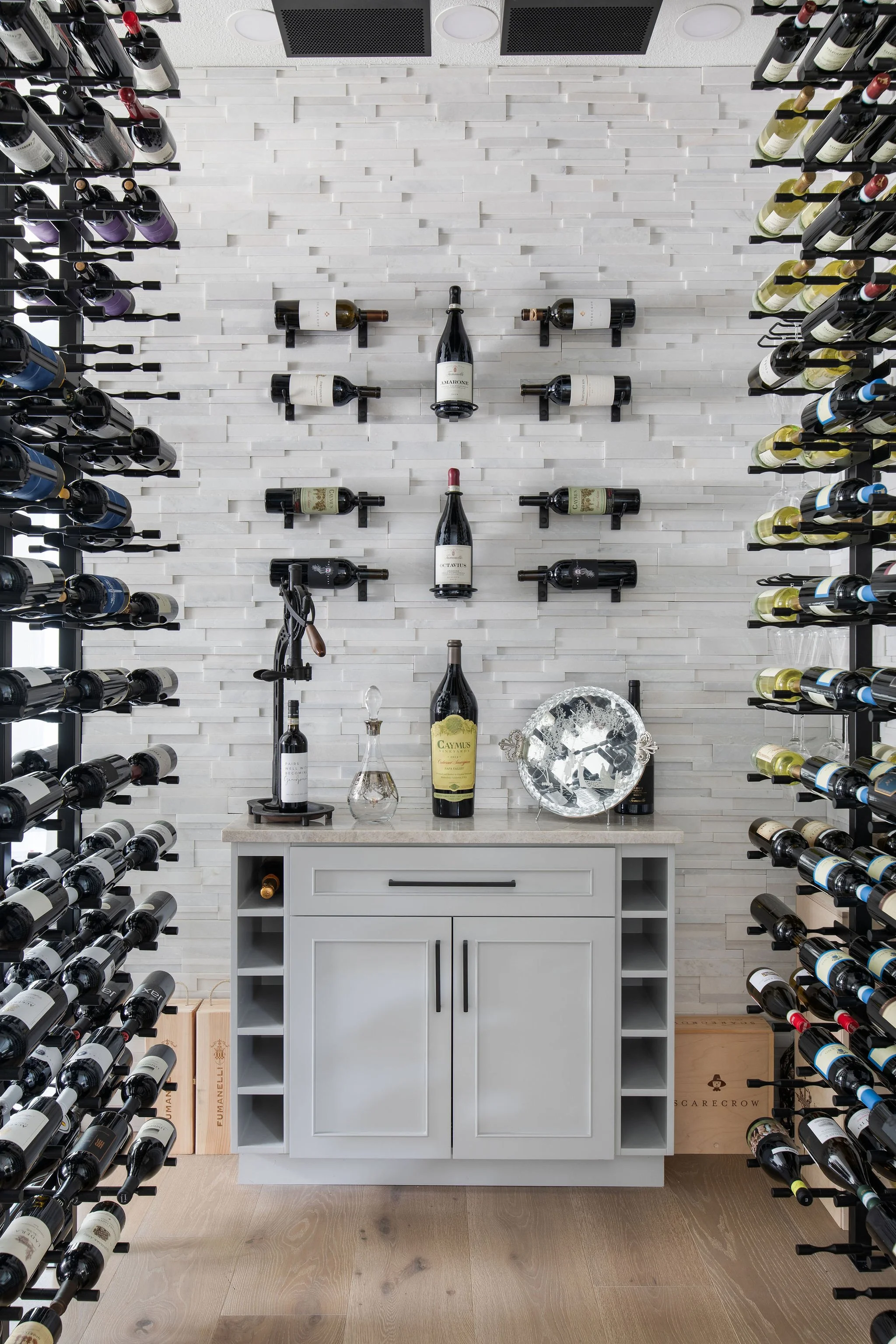
How long does a custom kitchen remodel take?
Plan on six to nine months from first design meeting to final walkthrough for most large-scale custom kitchens:
Design and selections: 6 – 10 weeks
Engineering and permitting: 3 – 6 weeks (can overlap with design)
Custom cabinetry fabrication: 8 – 14 weeks (built while demolition and rough-in happen)
Construction: 12 – 20 weeks depending on structural scope
The homeowners who are happiest at the end are usually the ones who locked in selections early. Decisions made during construction are the most common cause of delays and budget creep.
Is a $100K+ kitchen worth it?
It depends on your goals and your home. A common guideline from the National Kitchen & Bath Association is to invest roughly 10%–15% of your home's value in a kitchen remodel. For a $1 million home in West Lake Hills, Lakeway, or Tarrytown, that's 100,000–150,000, right in line with a custom kitchen. In higher-value homes, buyers expect a kitchen at that level, and an outdated one can hold back resale.
But most of our clients aren't remodeling to sell. They're investing in the room their family uses most, in a home they plan to stay in. At this level, the real return is a kitchen that fits the way you cook, gather, and entertain for the next 20 years.
How to choose a builder for a large-scale kitchen remodel
At this budget, the contractor you choose matters more than any single material. When you're comparing the best general contractors in Austin, look for:
A portfolio of completed custom kitchens at a similar scale and finish level
Experience with structural changes, engineering, and City of Austin permitting
Cabinetry expertise, whether built in-house or through a trusted custom shop they work with regularly
Detailed, itemized pricing and a written scope, so you know what's included before you commit
A dedicated project manager and clear communication throughout
Strong reviews from homeowners with similar projects. Reading what past clients say is one of the most reliable ways to find a top rated home remodeler in Austin.
Plan your custom kitchen with Alabaster Austin
Alabaster Austin specializes in custom and large-scale kitchen remodels, with custom cabinetry at the center of the work. We design and build for homeowners across Austin, West Lake Hills, Lakeway, Round Rock, Cedar Park, Georgetown, Leander, and Pflugerville, from reworked layouts and structural changes to the final millwork details.
We start by walking your space and learning how you use your kitchen, then give you a clear, itemized proposal so you know exactly what your remodel will include and cost before work begins.
Browse our project gallery, read Alabaster Austin reviews from local homeowners, and contact us to schedule your custom kitchen consultation.
Frequently asked questions
How much does a custom kitchen remodel cost in Austin?
Most custom kitchen remodels in Austin start around $100,000. Projects with layout or structural changes, butler's pantries, and premium appliances typically run $150,000 - $250,000, and whole-space transformations can exceed $250,000.
How much does custom cabinetry cost for a kitchen in Austin?
In a large-scale remodel, custom cabinetry and millwork typically account for about 30%–40% of the total budget. The final cost depends on the size of the kitchen, wood species, door style, finishes, and specialty storage.
How long does a large-scale kitchen remodel take?
Most custom kitchens take six to nine months from first design meeting to completion, including design, permitting, cabinet fabrication, and construction.
Do I need a permit for a custom kitchen remodel in Austin?
Almost always. Structural changes, moving plumbing or gas, new electrical circuits, and ventilation upgrades all require permits and inspections. Your builder should handle the permitting process.
Is custom cabinetry worth it over semi-custom?
For large or uniquely shaped kitchens, usually yes. Custom cabinetry uses every inch of the space, allows inset doors and specialty finishes, integrates appliances seamlessly, and is built to last for decades.
